What is Scroll Saw Art?
Scroll saw art is a form of wood carving that transforms an image into an intricate work of art. Each piece is created one cut at a time using a scroll saw, allowing for incredible detail and precision.
Every image is hand carved, making each work truly one of a kind. Rather than simply reproducing an image, I work closely with each client to create a piece that reflects their vision and specifications.
A key part of the process is selecting the wood. I individually choose different types and colors of wood to complement the color palette, texture, and overall theme of the original image. The natural grain of each board of wood becomes part of the artwork itself, adding depth that cannot be replicated by a print or digital image.
The result is a completely custom work of art—an image transformed into wood, one cut at a time.
My Process
The Image
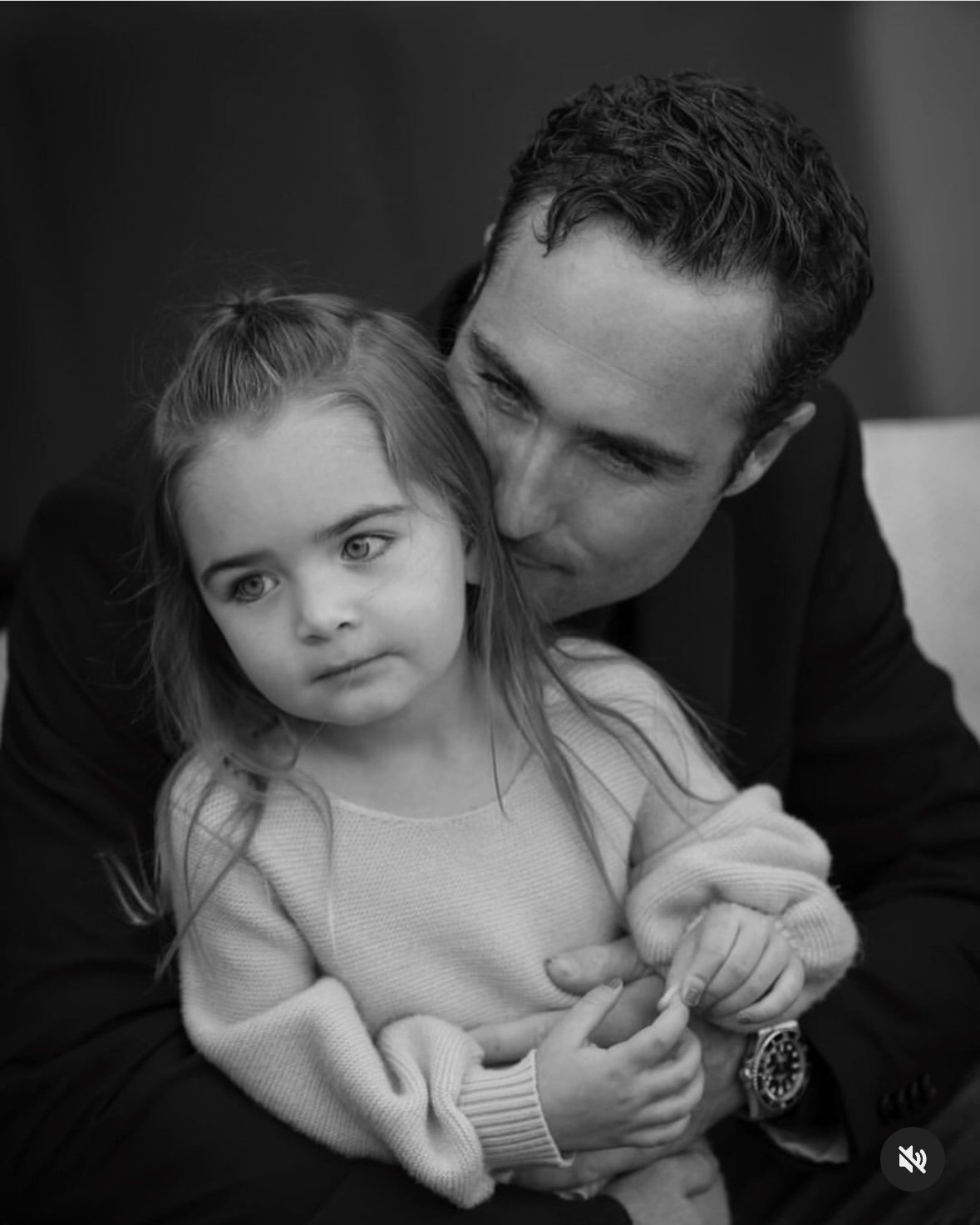
Every piece starts with the image. Clients usually bring a family photo, cherished memory, or iconic photograph for me to recreate.
The Pattern
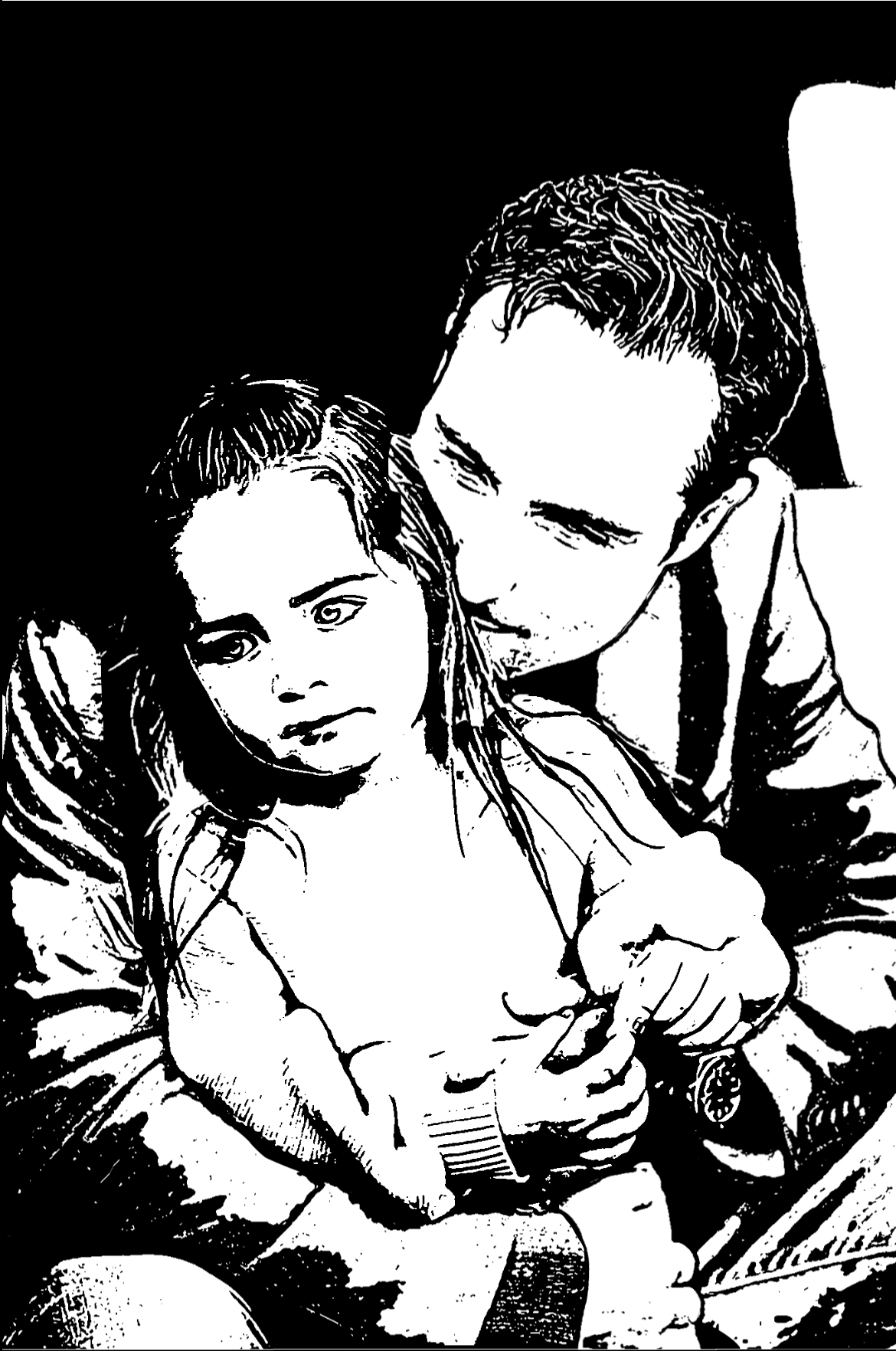
I take the image and create a black and white vector using software. The white represents the wood and the black represents the negative space.
The Product
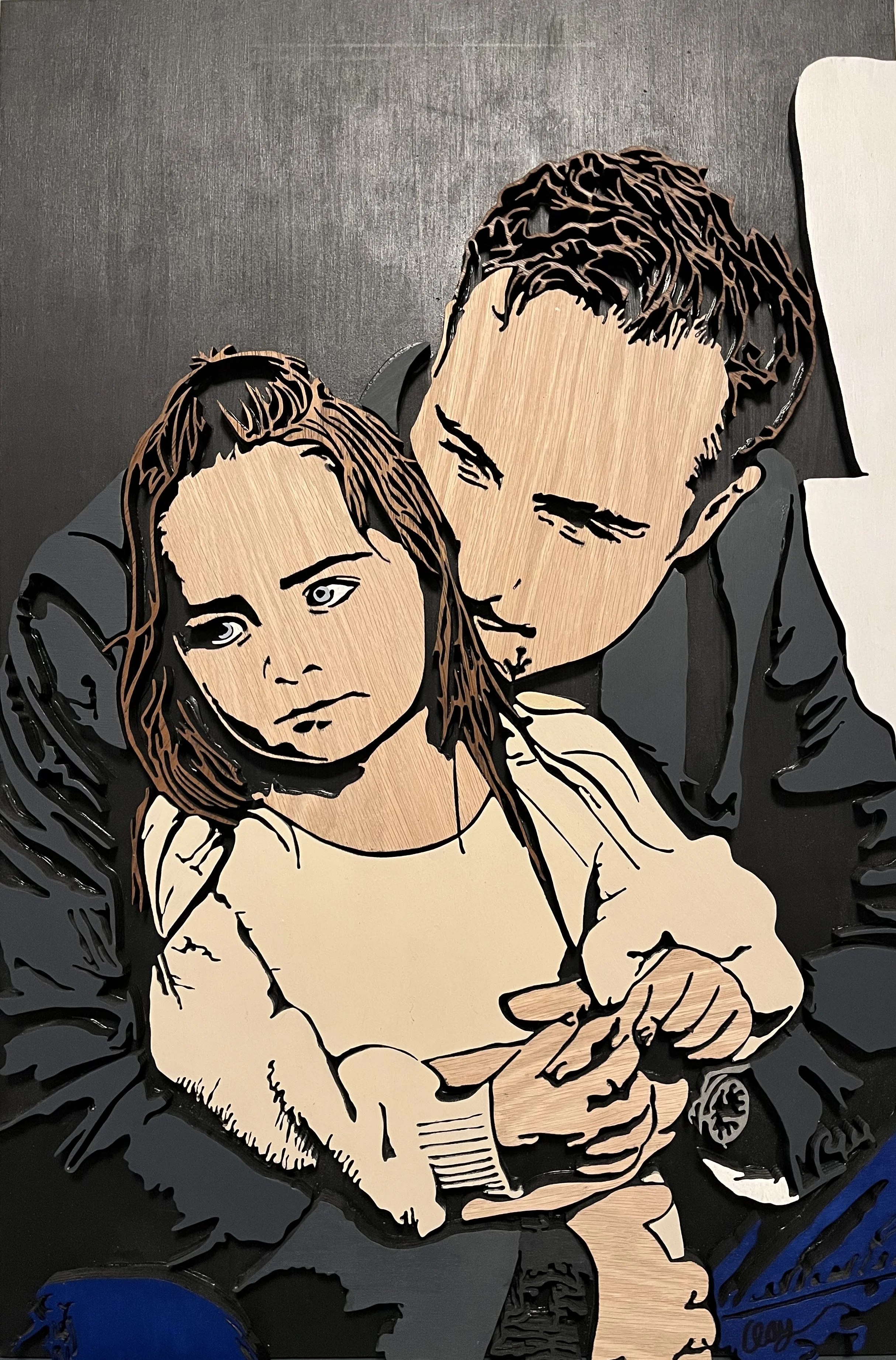
I print the pattern at a 1 to 1 scale so I can follow where the white and black touch with the blade. The result combines different woods and paints to capture each detail according to the client’s vision.
Frequently Asked Questions
-
A scroll saw is surprisingly similar to a sewing machine. The saw sits on a table and has its own cutting surface. There is a very thin blade in the middle of the cutting surface that rapidly moves up and down. I push the wood through the blade and turn it to carve any curve. Simultaneously, I control the saw with a foot pedal to ensure precise cuts.
-
No, I do not use a laser cutter to carve my artwork. First of all, that would undermine the hand-made quality of the art. Second, most laser cutters can’t cut at the usual depth I use (1/2 inch). Finally, using a laser would introduce a more burned appearance, which isn’t usually desired.
-
I make art of all sizes. The largest piece is a triptych around 9 feet long and the smallest fits on a piece of printer paper. However, my commissioned work is usually around 24 inches by 32 inches.
-
The main limit on sizing is actually being too small, not too large. I need at least 1/16th of an inch to get the blade into key details like eyes, the nose and the mouth. Thus, sometimes a desired image needs to go up a size for me to carve the faces. This is critical, given that faces are the most important part of the art. As for large pieces, I have experience working with large sizes such as 4 feet by 4 feet and 3 feet by 6 feet. I can also split up images into multiple panels to make large scale projects more manageable and transportable.
-
The timeline varies based on the size and complexity of the art. That said, the usual timeline is measured in months (3 months is about average). The timeline is usually discussed early in the process, so you’ll know when to expect the artwork. Also, I can speed up as needed if given proper notice.
-
Most of the details I carve are on the inside of a piece of wood, with no access to the outer edge. I drill a hole through every interior detail and thread the blade through before carving. I do this again and again for every detail. I’ve lost count of how many times I’ve done this!
-
Pricing is always a combination of the art’s size and complexity. I base my prices off of past projects, complexity of the pattern, and price of the materials. I usually give a price estimate after looking at the image and factoring in the project’s size. I then make the cutting pattern and present the price and projected image to the client. That said, I’m flexible and open to negotiating.
-
You can reach me anytime via our contact page or email. I aim to respond quickly—usually within two business days.
-
When working with clients, I strive to be collaborative, honest, and thoughtful. I’m here to guide the process, bring ideas to the table, and keep things moving. I tune the level of collaboration to what the client wants. Some clients like collaborating on every detail while others prefer a hands off approach. Either works for me!